
Orchid functional genome
Discovery of key genes that control orchid flower size (Chang-Hsien Yang)
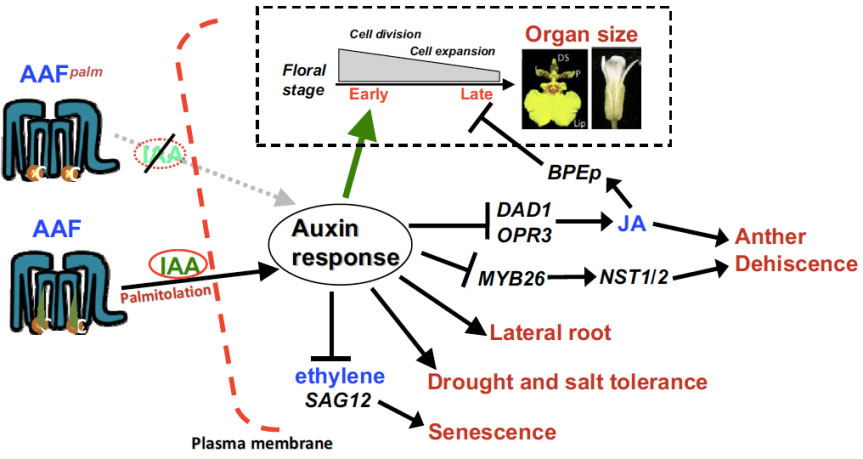
A tetraspanin gene Auxin Activate Factor (AAF) from Oncidium and Phalaenopsis orchids plays a key role in regulating the size of the orchid perianth. We found that the higher the expression level of orchid AAF orthologs, the larger size of the perianth organ produced. AAF orthologues regulated flower organ size by enhancing the efficiency of auxin response and the subsequent suppression of jasmonate in plants. A paper described this work was published in Plant Direct (2019).
Uncovering the secret of branching in Orchid (Jun-Yi Yang)
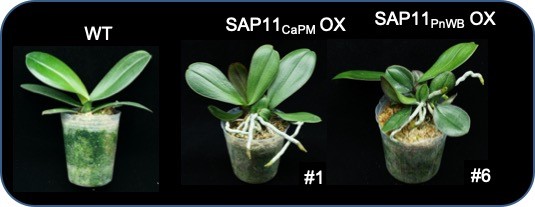
Orchids can be classified into two categories: monopodial and sympodial plants. This project establishes an orchid transformation system which help us to generate branching phenotype in monopodial orchid using SAP11 protein. The branching shoots caused by SAP11-mediated degradation of plant transcription factors can strengthen the growth potential and polymorphism of Phalaenopsis.
Identification and publication of a novel orchid virus (Fuh-Jyh Jan)
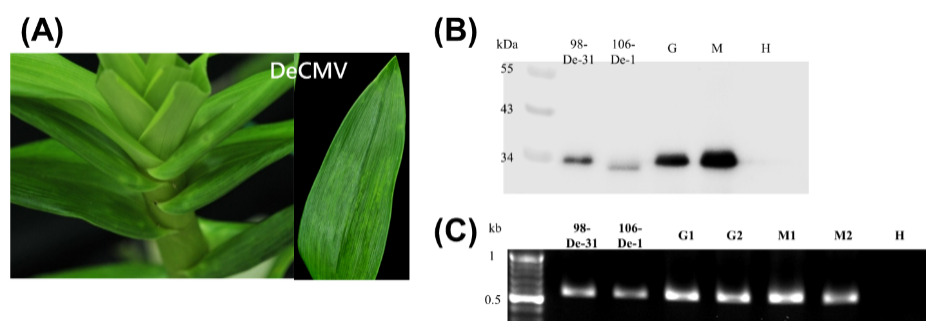
Dendrobium chlorotic mosaic virus causing (A) chlorotic and mosaic symptoms in dendrobium, (B) serological detection technology and (C) nucleic acid detection technology.
Rice functional genome
A unique rice gene promoting cell division, stress tolerance and the formation of large grains (Tuan-Hua David Ho)
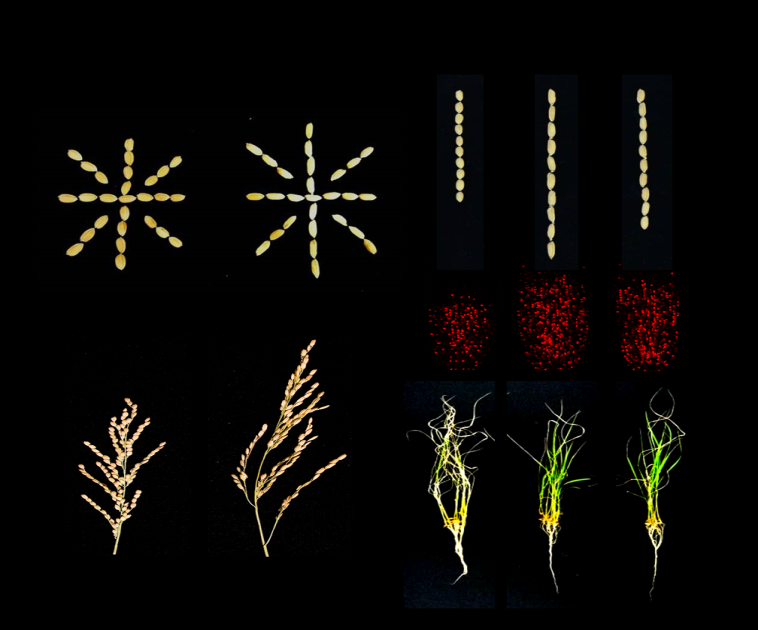
The Rice Big Grain 1 (RBG1) gene was discovered by the collaboration between Dr. Tuan-Hua David Ho’s group and the biotech company, BASF. RBG1 is highly expressed in meristematic tissues and increases DNA synthesis and cell division, leading to enlarged panicles and grains. It also enhances stress tolerance and grain yield.
Biofortification iron and zinc in rice (Dr. Wilhelm Gruissem)
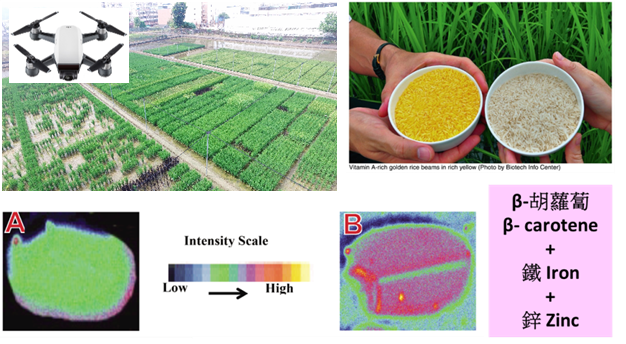
Professor Wilhelm Gruissem uses biofortification strategies to increase iron, zinc and pro-vitamin A (ß-carotene) content in rice by improving root absorption, transport and endosperm storage of these micronutrients. Confined field trials results show that biofortification strategies is successful in effectively increasing the iron, zinc and vitamin A content in polished rice, which enhance the nutritional quality and value of rice for a healthy human diet.
Develop new rice disease-resistant varieties through molecular-assisted breeding (Chang-Sheng Wang)
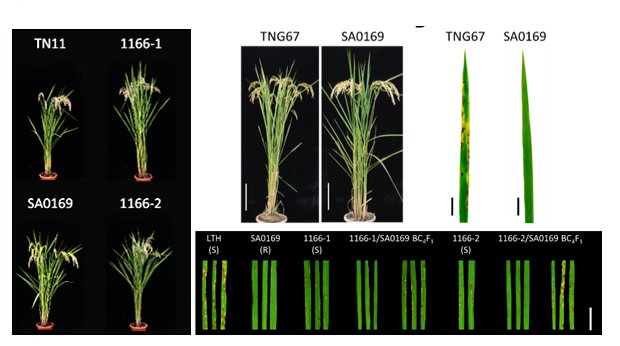
Developing of double resistant rice varieties using SA0169, a strong and durable rice blast disease resistant line as the donor line, and 1166-1 and 1166-2 as recurrent parents to breed new varieties resistant to both bacterial blight and blast diseases. New varieties will be released in 2021.
Plant defensive genome
Nicotiana benthamiana AGO10 helps virus infection (Yau-Heiu Hsu)
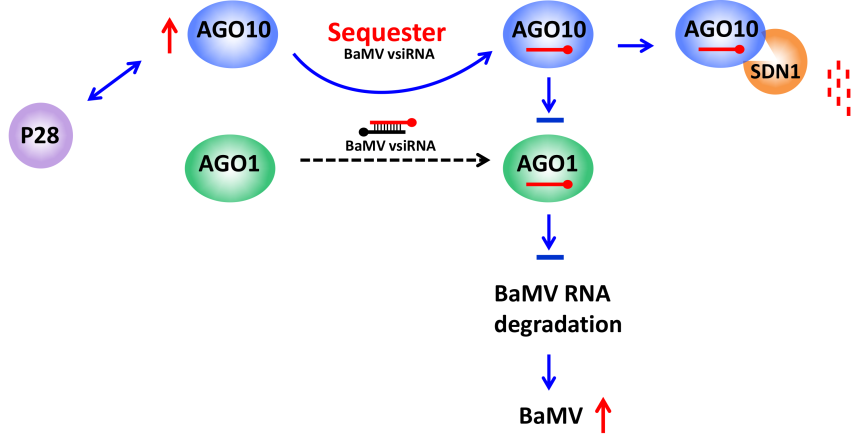
Schematic representation of the hypothesized model of NbAGO10 in facilitating BaMV infection.
Within BaMV infection, RNA-silencing suppressor (P28) upregulates the gene expression of NbAGO10, which competes with antivirally active NbAGO1 for binding BaMV vsiRNA. This study provides the evidence that virus hijacks AGO10-directed suppression of AGO1-mediated antiviral silencing to assist virus invasion, which represents a novel strategy to counteract antiviral RNA silencing.
Eukaryotic cell small GTPase RabF1 is involved in virus movement (Ching-Hsiu Tsai)
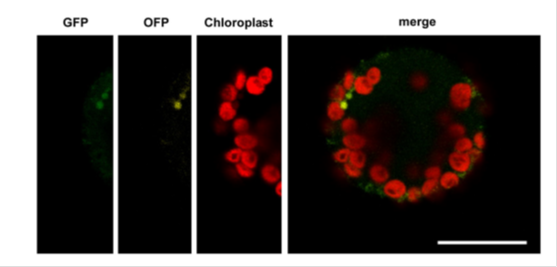
The knockdown experiment indicated that a small GTPase NbRabF1 is involved in virus cell-to-cell movement. Reducing the expression of NbRabF1, the green fluorescent foci (GFP carried by BaMV viral vector) were smaller than those of the control shown in (A) and statistically significant (B).
Breeding a papaya line with double-virus resistance (Shyi-Dong Yeh)
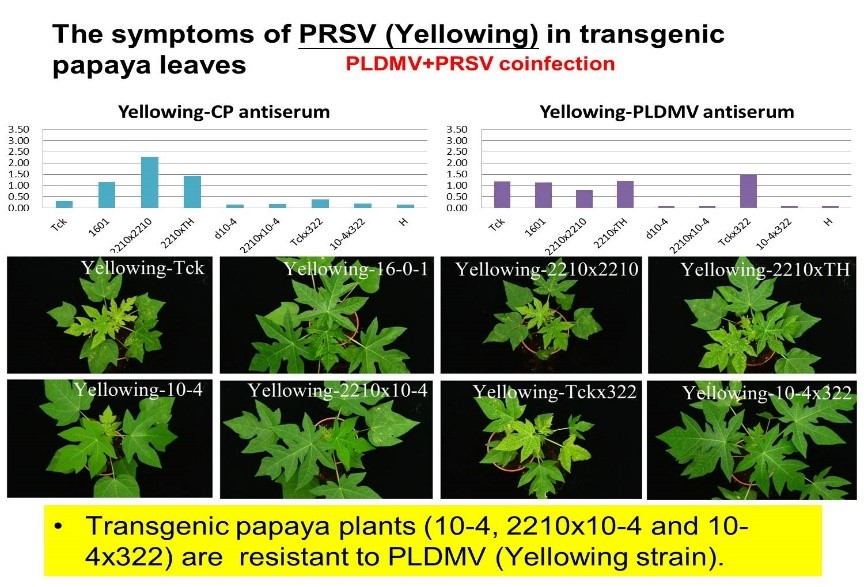
Tainong No. 2 papaya (2210X10-4 & 10-4x322) with double resistance to Papaya ringspot virus (PRSV) and Papaya leaf distortion mosaic virus (PLDMV). The plants were symptomless and ELISA negative when detected by corresponding viral antiserum one month after challenge with each virus. The double-virus resistant papaya lines represent the first case in the world.